The platform cracked down on thousands of QAnon accounts, but is it enough? |
|
|
Welcome to Decrypted, Digital Trends' new daily newsletter guiding you through the latest news in the world of tech, with insights from our senior writers. |
Facebook tries to curb the spread of QAnon |
By Will Nicol, Senior Writer
Facebook has made a public effort to crack down on misinformation and hate speech lately, and the company's latest move was to remove 790 groups affiliated with the conspiracy movement QAnon from its platform and impose restrictions on thousands more.
In a blog post, Facebook explained its rationale, saying that groups like QAnon "have celebrated violent acts, shown that they have weapons and suggest they will use them, or have individual followers with patterns of violent behavior." The decision comes as QAnon has made a resurgence in politics, with an avowed supporter winning a House primary runoff election in Georgia. QAnon is a product of the internet age, spawning on the message board 4chan, where an anonymous poster called "Q," claiming to be an intelligence officer close to President Trump, posted cryptic messages about a "deep state" conspiracy and predictions about the future. Although Q's vague, often ludicrous claims didn't come to pass (they said Hillary Clinton was on the verge of being arrested in 2017), they developed a zealous following. Although Reddit banned its QAnon subreddits in 2018, other online platforms are playing catch-up. Twitter and TikTok cracked down on QAnon last month, and Facebook has outlined a number of steps it will take to limit the group's ability to organize. QAnon has proven nimble at dodging moderation, however, and given its increasing adoption by political candidates (a MediaMatters report identified 77 congressional candidates who support the group), it may be more dangerous than ever. For platforms like Facebook, tamping down on QAnon may be like trying to bottle a flood. |
|
|
Canceling cow burps to save the environment |
By Jenny McGrath, Senior Writer
The seaweed isn't always greener. Sometimes it's red and has some surprising effects on ruminant digestion. It turns out that adding a pretty miniscule amount to cattle feed can greatly reduce the amount of methane cows release into the air via their burps. You may have heard cows contribute a fair amount of the greenhouse gas to the atmosphere during their digestion.
Digital Trends spoke to Alexia Akbay about her startup, Symbrosia, which is creating an additive for ranchers and farmers made of the red algae. There are lots of challenges that come along with the product, not the least of which is the sheer amount of food cows eat. Swapping 0.2 percent of their feed may sound simple, but a single animal can eat 22 pounds a day. And there are 1.4 billion cattle in the world, so it adds up. |
|
|
We talked to The Boys about the show's grisliest moments |
By Will Nicol, Senior Writer Amazon's darkly comedic superhero show The Boys is returning for a second season in September, and DT's Rick Marshall spoke to the cast about their most memorably gory moments. For those who haven't watched it, The Boys is set in a world where superheroes exist, but they work for a powerful corporation. Despite their outward charm, most of the superheroes are corrupt or violent, so a vigilante group called The Boys aims to take them down. The show's over-the-top violence is as surprising for the cast as it is for viewers. As Antony Starr, who plays the Superman-esque Homelander, explains: "Lasering my teenage crush in the head through her eyeballs whilst crying is not something I ever thought I would do" |
|
|
- In her review of Irish novel Exciting Times, Katy Waldman wonders if contemporary novels are too solipsistic, with no room for character growth.
- The Portland Trail Blazers have been the underdog story of the NBA's quarantined playoffs, and The Ringer's Brian Phillips penned an ode to team captain Damian Lillard.
|
|
|
What we're watching this week: Undead double feature |
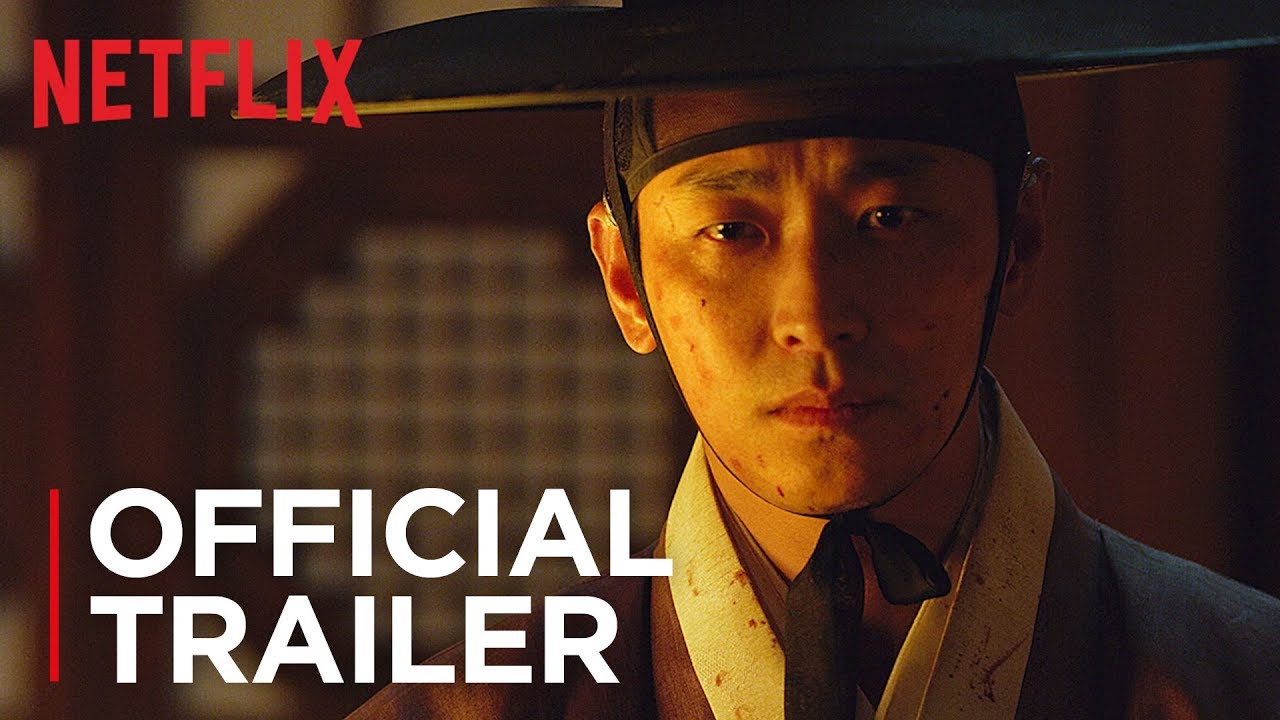
By Rob Oster, Copy Chief Zombie flicks may have lost some of their bite since The Walking Dead raised the subgenre to unprecedented levels a decade ago, but the undead are still alive and kicking in South Korea. Netflix subscribers can catch two examples of this: The 2016 film Train to Busan and the series Kingdom, which premiered in early 2019 and already has a pair of six-episode seasons under its belt. (It's not to be confused with another show on Netflix called Kingdom, which is a family drama about a group of MMA fighters.) Borrowing its setup from Snowpiercer, which was written and directed by another South Korean filmmaker, Bong Joon-ho, who won the Best Picture Oscar for last year's Parasite, Train To Busan is one white-knuckle ride. Taking place primarily on the titular mode of transportation, it eschews the slow, plodding zombies of George Romero for the Usain Bolt-like speedsters of 28 Days Later. Amid all the edge-of-your-seat thrills and the chaos of commuters fleeing the fast-growing zombie horde in tight confines, director Yeon Sang-ho crafts characters you care about as a survival-of-the-fittest mentality pits characters against fellow survivors as well as the zombies. Kingdom also focuses on a desperate battle against zombies in South Korea, but it diverges significantly from Train to Busan in most other aspects. Set in the 1600s, it's a story of political intrigue that follows a prince who must battle rivals trying to usurp the throne, in addition to throngs of flesh-eating ghouls. Like Train to Busan, the characters are surprisingly well-developed, especially the young queen who will go to any lengths to swipe the crown for her family. To its credit, the show makes the political intrigue every bit as exciting as the clashes with the infected. (Note: Be sure to watch the subtitled version -- the dubbing is hugely distracting.) |
|
|
| | | 111 SW 5th Ave. Ste. 1000, Portland, OR 97204 |
|
|
|
|




Comentarios
Publicar un comentario
Escribe tus comentarios aqui: