The U.S. will ban Tiktok from app stores Sunday |
|
|
Welcome to Decrypted, Digital Trends' new daily newsletter guiding you through the latest news in the world of tech, with insights from our senior writers. |
After failing to force a sale, Trump administration begins ban of TikTok |
By Will Nicol, Senior Writer
The U.S. Department of Commerce announced prohibitions on TikTok and the messaging app WeChat on Friday. As of Sunday, the apps will no longer be allowed on app stores. They will continue to function for those who have already downloaded them, but users won't be able to get updates, at least through traditional means.
It's the latest blow in the international feud between the U.S. and China over TikTok. In August, President Donald Trump issued an executive order calling TikTok a security risk and banning the app after 45 days. Trump offered a way for TikTok to remain in the U.S., however: Chinese parent company ByteDance could sell its operations to a U.S. company.
Trump's order rested on two claims. First, that TikTok collects an enormous volume of data on users, data which can be turned over to the Chinese government. Second, that TikTok censors content that the Chinese government disapproves of.
In the time since Trump's order, TikTok has had to walk a treacherous path between two world powers. The Chinese government reportedly would rather shut down the app than see it sold to a U.S. company -- in late August, China revised its rules around the sale of technology to foreign entities, ostensibly with TikTok in mind. As China flexes its economic might around the world, companies like TikTok are a form of soft power, giving it a cultural foothold in the U.S.
After rejecting an offer by Microsoft, ByteDance agreed to a deal with Oracle. However, the deal would merely make Oracle a "technology partner," with ByteDance retaining ownership of TikTok, as well as control of the platform's algorithm. That evidently fell short of what the Trump administration wanted, and Republican politicians quickly castigated the proposal, with Sen. Josh Hawley (R-Missouri) claiming "American national security is on the line."
While TikTok will remain functional for users, the Commerce Department's prohibitions on TikTok will kick into high gear on November 12, when internet services will no longer be allowed to host traffic for the app (a similar prohibition goes into effect for WeChat on Sunday). Secretary of Commerce Wilbur Ross reiterated that if a suitable deal is reached by November 12, TikTok can continue to operate, but given China's hard stance so far, that's unlikely. |
|
|
Apple's September event didn't give us an iPhone, so what is there so look forward to? |
By Andrew Martonik, Mobile Editor
Well we didn't get the iPhone 12, but Apple gave us plenty to look at with its livestreamed event on Tuesday.
The base iPad, now in its 8th generation, is both boring and incredibly important for the company. It has the same old design, huge bezels and a Lightning port — ultimately, it's not a desirable product. But it's Apple's mass-market tablet, at just $329, and there's no surprise it's being targeted at kids and education.
The new iPad Air, however, stands out: It''s arguably a better buy than the 11-inch iPad Pro. It features a superpowerful processor, new design to match the Pros, Magic Keyboard and Apple Pencil 2 support, and a $200 lower starting price.
The Apple Watch Series 6 is a warmed-over Series 5 with a Pulse Ox sensor that offers dubious value. But it also comes in new colors, so there's that. Concurrently, the Apple Watch SE splits the difference between a Series 4 and 5, at a great price of $279. These are going to fly off (virtual) shelves this fall.
More critical to Apple's bottom line are the services. Fitness+ takes dead aim at Peloton and myriad workout-from-home apps at $10 per month, and acts as yet another tendril keeping you tied to Apple. Better yet if you subscribe to a new Apple One bundle. For $15 to $30 per month, you get a discount with multiple services at once — even if some offer little value on their own. |
|
|
It was a big — and frustrating — week for gamers |
By Giovanni Colantonio, Digital Trends Reporter
This past week was an exciting one for gaming fans as the next generation of video games finally came into focus. Unfortunately, it was also a headache for many who wanted to buy and pre-order new gaming technology.
On Wednesday, Sony finally announced the price and release date for the PlayStation 5. But the announcement quickly devolved into chaos as pre-orders for the console suddenly went up at various retailers without warning, then sold out within minutes. Sony had earlier promised that it would give fans fair warning when pre-orders were set to go live. The company even set up a pre-order notification system for fans weeks ago, which began sending email alerts out hours after the console had sold out at retailers like GameStop and Walmart.
PC die-hards looking to stay away from new consoles didn't have it any easier. On Thursday, Nvidia's new GeForce RTX 3080 graphics card went on sale, but the launch was every bit as frustrating as Sony's. The cards sold out instantly, leaving fans refreshing retailer pages for hours in hopes that a new round went on sale. Nvidia told Digital Trends that its own site was experiencing errors due to high traffic, and that the company was working to fight off scalpers and bots.
Hopefully, things will be smoother for Xbox fans next week, when the Xbox Series X and Series S go up for pre-order September 22. |
|
|
Inside Intel's wild, immersive movie studio |
By Drew Prindle, Features Editor
Remember the "bullet time" scene from The Matrix? The one where Neo does the limbo to dodge an incoming flurry of bullets, then time slows down and the camera pans around him in a way that seems impossible? At the time, it was one of the most technically impressive shots ever captured. Even now, with all the cinematic marvels we have in 2020, it's still difficult to pull off a shot of that caliber.
Intel wants to change that. It's on a mission to make those kinds of mind-bending, immersive cinematic shots easier and more feasible for filmmakers.
To do so, the company has built an enormous geodesic dome, outfitted with some of the most cutting-edge camera tech on the face of the planet. It essentially uses a set of 96 high-resolution 5K cameras to capture action in two dimensions — then employs proprietary algorithms to stitch all those together and create a three-dimensional, 360-degree scene in which directors are free to change the perspective however they like. Check out this clip to get a sense of what's possible with such a setup. Is this the future of moviemaking? |
|
|
- In a review of Jimi Hendrix biography Wild Thing, James Parker reflects on the guitarist's complicated persona.
- A bit of poetry: Roger Reeves' Grendel.
|
|
|
What we're watching this week: Marianne on Netflix |
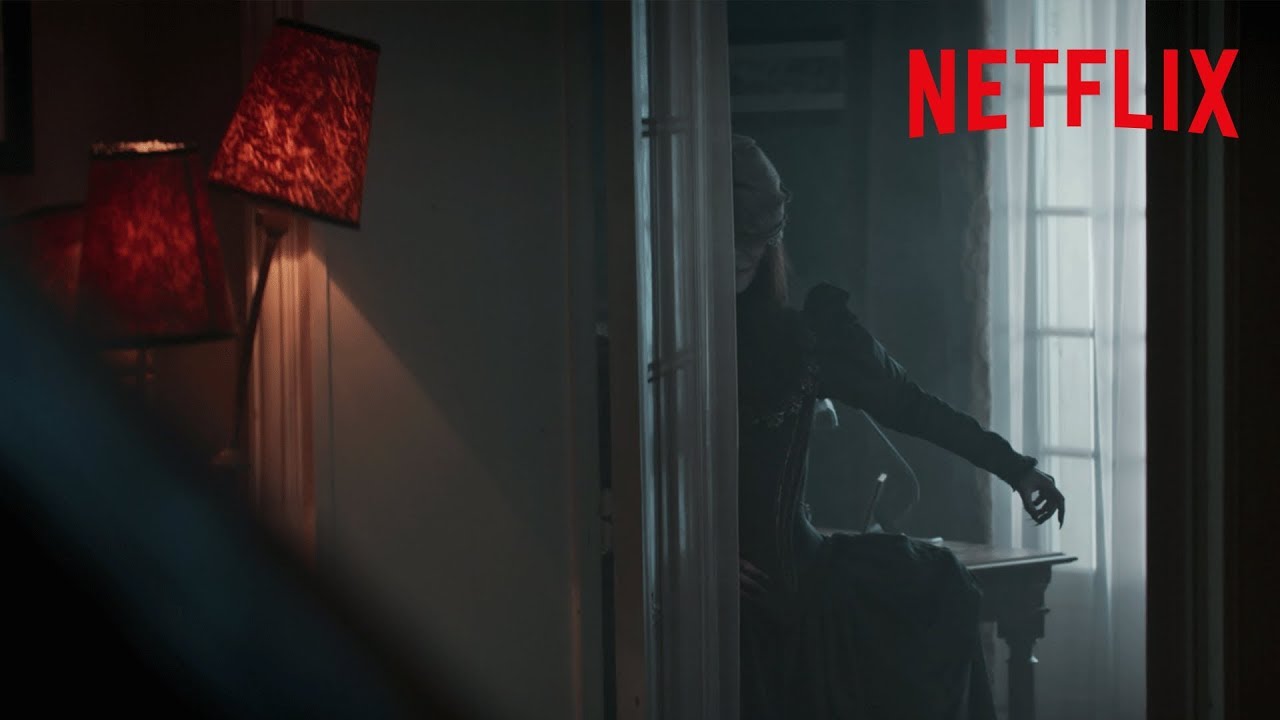
By Rob Oster, Copy Chief I love a good horror movie or series, but because so many of them are not scary -- or very good -- I'm reluctant to take a chance on one unless it's been recommended to me. Well, I owe a co-worker big-time for pointing me in the direction of Marianne, which in my opinion is the second scariest show currently on Netflix after The Haunting of Hill House. The French-language series follows a young writer named Emma, who has become rich and famous for her fictional books about the evil witch Marianne, an actual malevolent spirit who has stalked Emma's dreams since childhood. When Emma decides to stop writing about the battle between her alter ego Lizzie Larck and Marianne, the vindictive and malevolent witch is none too pleased. It turns out that Marianne is a bit of an attention hog, and has been feeding off Emma's writing. When Emma puts her pen down, Marianne becomes hell-bent on getting her writing again by any means possible. Emma's estranged parents, her dedicated assistant, and her circle of childhood friends become targets as she returns to her quaint-seeming coastal town after an absence of many years. Despite the picturesque locale, the series deftly establishes a persistently creepy vibe and feeling of dread. That's due in large part to an effective score and to Mireille Herbstmeyer, who plays Madame Daugeron, the mother of one of Emma's longtime friends and the current host to the wicked Marianne. With her disquieting rictus grin, bulging eyes, and a voice that defies logic by being both singsong and devoid of emotion at the same time, she's the creepiest of all the creepers. But it's that smile that will make the hairs on the back of your neck stand at attention -- it's wide and curved and lacking anything resembling cheer or warmth. While not the elaborate, intricately structured puzzle box that is Hill House, Marianne is the perfect companion for a weekend binge as the days get dark sooner and a chill returns to the air. All eight episodes of Marianne's lone season are on Netflix. |
|
|
| | | 111 SW 5th Ave. Ste. 1000, Portland, OR 97204 |
|
|
|
|




Comentarios
Publicar un comentario
Escribe tus comentarios aqui: